Incinérateur pour animaux aquatiques

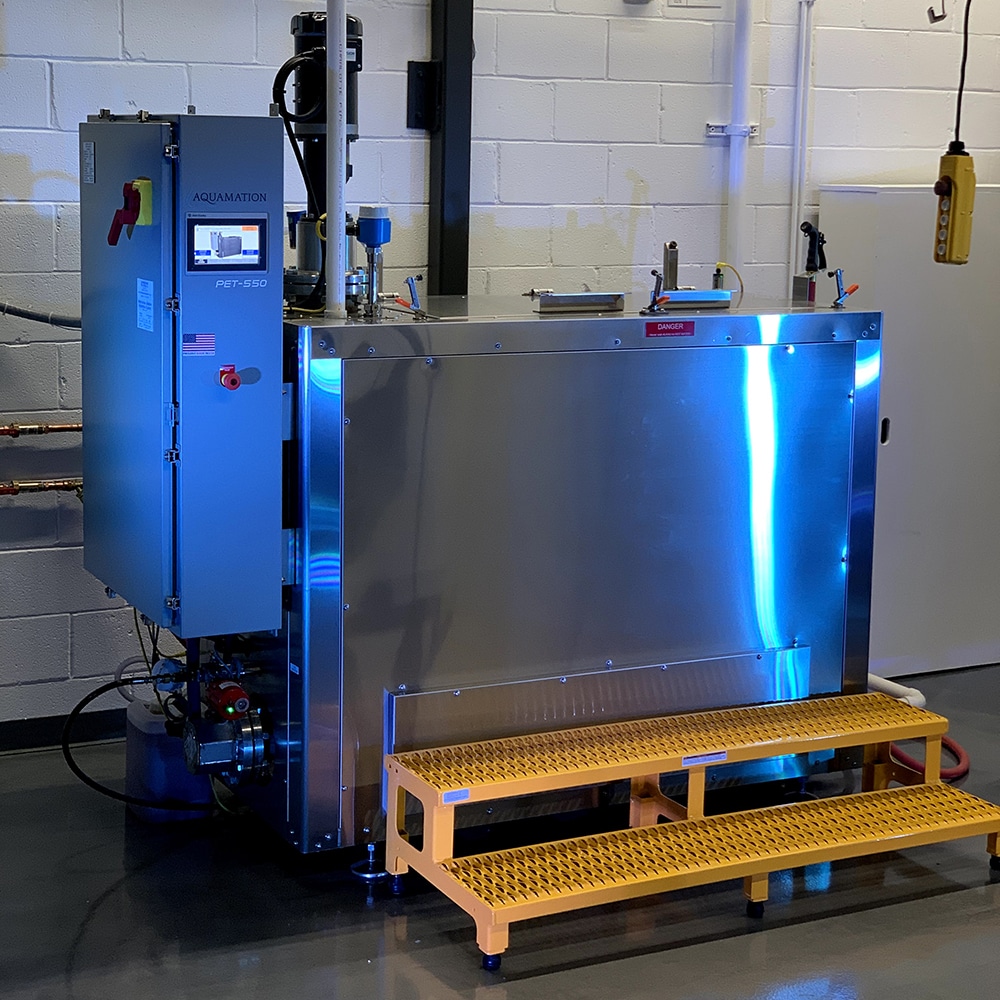
Aquamation est une méthode de disposition finale qui est disponible pour nos proches humains et nos animaux de compagnie. Le nom scientifique de ce processus à base d'eau est l'hydrolyse alcaline. C'est le même processus qui se produit dans le cours naturel lorsque le corps est mis en terre. Une combinaison d'un flux d'eau doux, de température et d'alcalinité est utilisée pour accélérer la décomposition des matières organiques.
L'aquamation pour animaux est approuvée partout aux États-Unis et au Canada. L'aquamation pour humains est approuvée dans 21 États, 4 provinces, ainsi que dans d'autres régions du monde.
Le processus d’aquamation est réalisé après toute cérémonie d’adieu ou visite que la famille souhaite organiser. Lorsque le moment est venu, le corps est placé avec respect dans un récipient en acier inoxydable. Une solution alcaline est ajoutée en fonction des caractéristiques individuelles (poids, sexe, état d’embaumement), puis le récipient est rempli d’eau. La solution composée de 95 % d'eau et de 5 % d'alcali est chauffée à une température comprise entre 93 et 150 °C et circule doucement pendant toute la durée du processus.
À la fin du processus, toute la matière est décomposée en ses plus petits éléments constitutifs ; il ne reste ni ADN ni ARN. L'eau stérile utilisée est rejetée en vue de son recyclage (les corps sont composés à environ 65 % d'eau au départ), et l'appareil procède à un rinçage à l'eau claire de l'équipement et des restes. Lorsque l'opérateur ouvre la porte, il ne reste que les minéraux osseux inorganiques. Ces minéraux sont transformés en poudre et remis à la famille dans une urne. Cette dernière étape du traitement est identique à celle suivie lors d'une crémation par flamme. De nombreuses familles organisent une cérémonie de célébration de la vie ou un rassemblement lorsque les restes de leur proche leur sont remis.
Les implants médicaux ne sont pas détruits dans ce processus. Les métaux sont propres, stérilisés et semblent neufs après le processus. Ces métaux sont recyclés par un affineur de métaux pour être transformés en nouveaux matériaux. Les affineurs de métaux sont stupéfaits par l'état immaculé des métaux issus de l'hydrolyse alcaline par rapport à l'incinération par flamme.
L'utilisation de l'eau dans le processus d'aquamation est très faible. Aquamation le processus utilise moins d'eau qu'un foyer n'en utilise en une journée (source: watr.usgs.gov). Cela comprend tout de l'eau utilisée pour le processus, ainsi que le rinçage à l'eau claire des restes finaux et du récipient.
Si vous souhaitez en savoir plus, veuillez contacter Bio-Response Solutions au (317) 386-3500
 English
  Nederlands
  Français
  Deutsch
  Italiano
  Polski
  Español