Is Aquamation ash safe to handle?

Akwamacja jest metodą ostatecznego pochówku, dostępną zarówno dla naszych ukochanych ludzi, jak i zwierząt. Nazwa naukowa tej metody opartej na wodzie to hydroliza alkaliczna. Jest to ten sam proces, który zachodzi naturalnie, gdy ciało zostanie złożone w ziemi. Połączenie łagodnego przepływu wody, temperatury i alkaliczności jest wykorzystywane do przyspieszenia rozkładu materiałów organicznych.
Akwamacja dla zwierząt jest zatwierdzona wszędzie w Stanach Zjednoczonych i Kanadzie. Akwamacja dla ludzi jest zatwierdzona w 21 stanach, 4 prowincjach, a także w innych częściach świata.
The Aquamation process is performed after any viewing or visitation services the family wishes to have. When it’s time for the process, the individual body is respectfully placed in a stainless steel vessel. Alkali is added to the process based on individual characteristics (weight, sex, embalming status), and the vessel fills with water. The solution of 95% water and 5% alkali is heated to 200-300°F, and gently circulated for the entire length of the process.
Pod koniec procesu cały materiał zostaje rozłożony na najmniejsze cząsteczki; nie pozostaje żadne DNA ani RNA. Sterylna woda procesowa jest odprowadzana do recyklingu (nasze ciała składają się przecież w około 65% z wody), a urządzenie przepłukuje sprzęt i szczątki świeżą wodą. Kiedy operator otwiera drzwi, pozostają tylko nieorganiczne minerały kostne. Minerały te są przetwarzane na proszek i zwracane rodzinie w urnie. Ten ostatni etap przetwarzania jest taki sam, jak w przypadku kremacji ogniowej. Wiele rodzin organizuje uroczystość upamiętniającą życie zmarłego lub spotkanie, gdy szczątki bliskiej osoby są zwracane pod opiekę rodziny.
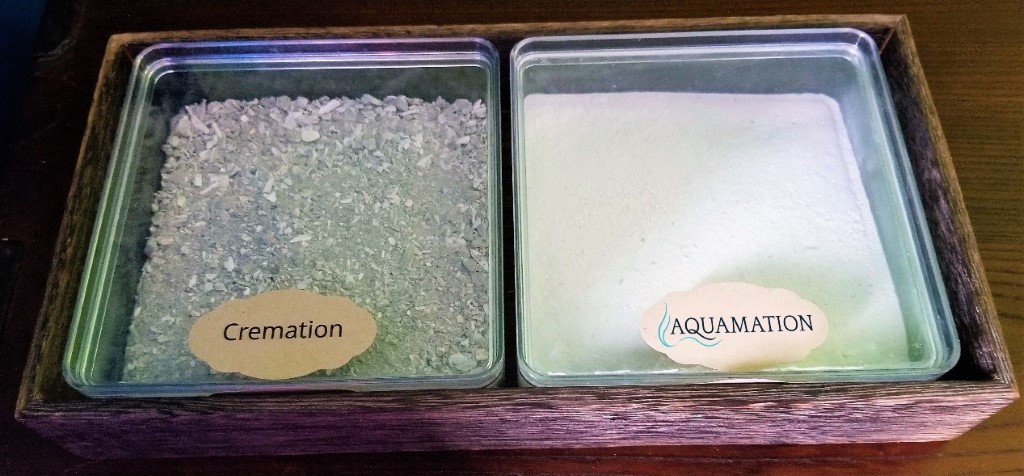
Proces kremacji płomieniowej odbywa się w temperaturze 1600-1800°F, a szczątki znajdują się w bezpośrednim kontakcie z płomieniem. Część nieorganicznych pozostałości mineralnych jest tracona do powietrza przez komin. Akwamacja proces zachodzi w temperaturze 200-300°F bez wszelki ogień, a krążenie wody w systemie przypomina przepływ potoku lub strumienia. Jest bardzo delikatny dla końcowych pozostałości minerałów, co pozwala na obecność większej ilości popiołu na końcu procesu.
The ash remains are 100% safe to handle. Alkaline hydrolysis is a proven sterilization process that results in pathogen and disease free remains.
As with anything, toxicity of a substance is a function of concentration. Miracle grow is a fertilizer, but if over-applied, it can kill a plant. A daily multivitamin is not toxic when taken as directed, but it would be toxic (and likely deadly) if the whole bottle were to be taken. When spreading or scattering ashes, we need to pay mind to where we are scattering them. A cremation garden that allows the scattering of ashes from hundreds of individuals can be a tough environment for growing plants. In extreme cases, poor practices could result in contamination of the water table. For families wanting to use the ashes from Akwamacja or flame cremation as part of a potting soil, allowing their loved one to live on through the plant, the ashes are certainly not toxic if the soil is properly prepared. Significantly diluting the calcium phosphate ashes with potting soil and a pH balancer to match your region and specific plant type makes the ashes beneficial to the plant instead of potentially toxic. Your Akwamacja organizator pogrzebu może udzielić Ci wskazówek dotyczących stworzenia Twojego żywego pomnika.
Please check local regulations to make sure the scattering location is okay prior to scattering, and speak with your funeral professional about the best way to scatter the ashes so your experience can be as meaningful as possible. Funeral professionals have great tips for making the scattering experience go as expected. Some special care must be taken when spreading the ashes in wind or water, as the ash is quite fine. Your Akwamacja Dostawca udzieli Ci wskazówek.
– Mitch